بِسْمِ ٱللَّٰهِ ٱلرَّحْمَٰنِ ٱلرَّحِيمِ

  • When I listen to the recitations of the late Sheikh Noreen Mohammed Siddiq, may Allah have mercy on him, I am met with waves of unrelenting nostalgia and melancholic yearning for a place and time that, for the most part, I am a stranger to. Slivers of time spent in a home away from home have left me with everlasting memories that shadow the moments that made them. The sound of my grandmother reciting Quran after praying Fajr. The chant of hundreds of children reciting their daily lesson from a wooden tablet clutched in their laps.

    When I have the privilege of being present when the elders make dhikr together, I am transported to the same place. A young xirrow quietly memorising a poem in the corner of the masjid. A distant rattle of a koor placed on a camel’s neck, her cry reminiscent of the jibaad olol Careys Isse choruses in his poem Maxaaa Ani Igu Jira. This is no coincidence.

    It is no coincidence that this style of recitation—most common in Sudan, Somalia, and the wider Horn of Africa—draws comparisons to West African styles such as that of the Soninke peoples, although they differ significantly. The danger of grouping Sub-Saharan African practices is not lost on me, but the underlying commonality that stretches from the Horn through the Sahel all the way to the Gambia is a distinctively African tone.

    To better understand these tones, it is helpful to first look at the way the Quran is taught and memorised across Africa. There are a plethora of regional names for the same institute: in Sudan, a khalwa; in Somalia, a dugsi; in Senegal and the Gambia, a daara. Across the Muslim world, the most common name is madrasa. Although globally the setting varies, the scene in Africa is soothing in its consistency. A building close to or attached to a mosque, often in rural areas and constructed from humble clay or mud bricks, or possibly even a thatched hut; pots of black ink; wooden tablets with excerpts of the Quran carefully written across them; and the steady, bright hum of children’s voices reciting the Quran.

    The process by which students memorise the Qur’an follows an order as old as the tradition itself. A child begins by learning the Arabic alphabet, then moves to copying and reciting short verses under the close supervision of their teacher. Each line written onto the wooden table is recited repeatedly until it becomes second nature. Lessons progress in difficulty until the student can open any page and read fluently. Only then is the student deemed ready to begin the extensive process of memorising the Qur’an.

    Under the instruction of the ustādh, the student writes a new portion of the Qur’an on their lawḥ each day, recites it until memorised, and recites it blindly to their ustādh or a senior student, who corrects mistakes, washes the tablet clean, and repeats the process the next day. This cycle of inscription, recitation, and memorisation forms the rhythm of Qur’anic education across much of Africa. Through this orally transmitted programme, regional tones and acoustic cultural patterns infuse themselves into the recitation of the Qur’an.

    Khalwa pupils in Mauritania holding wooden tablets.

    Throughout their studies, the student learns the words of the Qur’an, the science, and the sound of it: the delicate balance of articulation and melody that defines Qur’anic recitation. The rules that govern these sounds, known collectively as tajwīd, and the recognised forms of recitation, or qirāʾāt, which vary across regions. It is important to note that these fields of Qur’anic science, and the texts they are based on, do not specify or govern any rules regarding tone and pitch.

    Tajwīd is the foundation of Qur’anic recitation: a technical discipline concerned with articulation, timing, and the preservation of meaning. Its rules govern how consonants emerge from the mouth (makhārij), the qualities they carry (ṣifāt), the correct handling of elongation (madd), and the discipline of pausing and resuming (waqf wa ibtidā’). Classical manuals such as Ibn al-Jazarī’s al-Muqaddimah al-Jazariyyah1 emphasise a single goal: to read the Qur’an exactly as it was transmitted, letter for letter, without distortion.

    Ibn al-Jazarī’s famous maxim is blunt:

    “وَلَيْسَ بَيْنَهُ وَبَيْنَ تَرْكِهِ إِلَّا رِيَاضَةُ امْرِئٍ بِفَكِّهِ”

    “There is nothing between correct tajwīd and its neglect except a person’s willingness to train his mouth.”

    Once tajwīd is established, reciters choose a riwāyah from a particular qirāʾāt. These are recognised methods of recitation; a riwāyah is a specifically narrated transmission of a qirāʾāt. Seven qirāʾāt are widely agreed upon by scholars, with ten recognised more broadly. They govern pronunciation, permissible vowelisations, and small variations. None of these descriptions substitute for hearing them; the video below includes a verse-by-verse reading of the ten qirāʾāt, with differences highlighted.

    The riwāyah dominant amongst reciters in Sudan and the Horn of Africa—especially those who recite in this ‘style’—is Al-Duri from the qirāʾāt of Abu Amr al-Basri. Although it was once the most popular in the Mashriq, Ottoman influence saw to the spread of the Hafs riwāyah, now the most commonly used2.

    Maqām are melodic modes used by many reciters to colour and beautify recitations of the Qur’an. A completely aesthetic set of devices, they are permitted by many scholars so long as tajwīd is observed, but it’s important to note: they are not a religious obligation, and reciters typically fall into melodic patterns naturally, not through a learned scale or through ‘singing’ the Qur’an. A reciter will often shift maqām depending on the subject matter of the verses they recite, shifting tone to reflect or convey emotions felt through the recitation. The video below covers some of the most well-known maqām and the emotional context in which they’re often deployed.


    The reciters whose ‘style’ forms the crux of this essay lean towards pentatonic melodic gestures, intervals and formulae that resemble regional singing and poetic traditions. This produces the soulful quality that we all identify. Listen below to a recitation of Surah Al-Duha by a Somali qari in a traditional tone, then compare the breathwork, pitch, and cadences to the excerpt of a poem recited by the late Abdullahi Suldaan Timacade.

    An excerpt of a poem by Abdullahi Suldaan Timacade.
    Surah Al-Duha recited by an unknown Somali qari.

    The first clip below is an excerpt of a dobeit poem by the late Mahmood Wad Al-Khawyia. The second is of Sheikh Al-Zain Muhammad Ahmad—one of Sudan’s most beloved reciters and a personal favourite of mine—who articulates the presence of local sonic culture in Qur’anic recitation:

    “This is the tone of the environment I grew up in—the desert. It sounds like dobeit. The reciters in the Levant recite according to the melodies they know, as do the ones in Egypt, the Hijaz, North Africa, and elsewhere.”3

    His words say what pages of explanation cannot. Don’t take my word for it—listen for yourself.

    Poetry by the late Mahmood Wad Al-Khawiya.

    Surah Yunus 88-92, recited by Sheikh Al-Zain Muhammad Ahmad.

    The excerpts below—a Soninke recitation and a Somali subac—come from opposite ends of the continent, yet their sonic resemblance is unmistakable. Both traditions centre on communal recitation circles in which students read verse by verse, with the group often joining together at the end of each āyah. Despite the geographical distance, they share the same tonal palette: a modest pentatonic scale, a steady mid-range register, and ornamentation that is present but deliberately restrained. Pitch is coloured through gentle slides, subtle inflections, and brief held tones rather than wide leaps or dense melisma.

    What emerges is a shared cadence—calm, grounded, and text-forward—shaped not by imitation but by parallel educational cultures. The dugsi in the Horn and the daara in Senegal, Mali, and the Gambia foster nearly identical practices: outdoor group recitation, oral imitation of the teacher’s tone, and a rhythmic call-and-response structure that naturally imprints itself on the student’s voice. These environments create an acoustic memory that follows the reciter long after they leave childhood.

    I hope the clips below convey the beauty and subtlety of this shared sonic world far better than any description could.

    Soninke recitation, Surah An-Nur:26-27.

    Somali children in subac, Surah An-Nisa:23.

    By the late twentieth century, many regional recitation styles—particularly in Somalia—were beginning to buckle under a growing homogenising force: the rise of a globalised Qur’ānic sound centred on Saudi and Hijazi norms. This transformation was neither accidental nor merely a matter of taste. Ethnomusicologist Michael Frishkopf argues the mass distribution of Qur’ān tapes created a “transnational Islamic soundscape” that increasingly standardised what counted as “proper” recitation4. Once cassette tapes and, later, CDs became ubiquitous, the voices that travelled furthest were those of ʿAbd al-Bāsiṭ, al-Minshāwī, and eventually the Saudi imams of the Ḥaramayn.

    The widespread circulation of these recordings, combined with the ascent of Salafi movements, accelerated the erosion of older regional tones. In the name of purifying religious practice, critics dismissed African and other non-Arab tonalities as unnecessary ornamentation or uncomfortably close to singing. Yet, as Frishkopf notes, these critiques conveniently ignore that all Qur’ānic recitation is shaped by local sonic culture—including in the Gulf itself.

    In his essay The Conception of Islam in Somalia, Dr Abdurahman Abdullahi describes how the rise of Salafism placed Somali graduates of Saudi Islamic universities in the 1970s on a “collision course” with the country’s deeply rooted Sufi traditions5. Returning with an imported hostility towards local practices, they helped reframe long-established forms of devotion—including recitation styles—as deviant or impermissible. The decline of traditional modes of recitation was thus collateral damage in a much broader engineered shift: a deliberate ideological realignment that elevated one regional sound as universal and relegated others to the margins.

    Despite all this, homogenisation never completely erased regional sounds – they were maintained in memory, in rural areas, and in recordings. With the introduction of social media and the decentralisation of media, the same technological forces that once aided erasure, began to revive it. Short-form video created a space where obscure local reciters could reach audiences at home and in the diaspora overnight. All of the clips above I found on TikTok.

    Social media is unfolding the shadow of the standardisation that its predecessors established. As the pool of sonic aesthetics continues to grow and diversify, so do recitations across the world. A young person learning the Qur’an today can listen to Al-Minshawi to perfect their articulation and listen to Sheikh Noreen to add ornamentation. Elements of both reciters can be woven into the growth and discovery of their own personal voice.

    It is important to clarify that this essay is not meant to diminish the value or beauty of other styles of recitation—Al-Minshawi, Maher Al-Mu’aiqly, and other reciters remain among my personal favourites, and their voices continue to inspire Muslims around the world.

    Rather, this post is an attempt to articulate the resonance I felt when I first listened to traditional Somali and Sudanese recitations, a soundscape that has long stirred a particular nostalgia and longing within me. In this sense, it is a tribute to the late Sheikh Noreen Mohammed Siddiq, may Allah have mercy on him, whose voice embodied this heritage.


    I pray for the people of Sudan during the current conflict and hope for their safety and peace.

    اللهم كن لاخواننا المستضعفين في بلاد السودان. اللهم كن لهم عونا ونصيرا وظهيرا
    اللهم ارحم موتاهم واشف مرضاهم
    اللهم عليك بالظالمين فانهم لا يعجزونك


    1. https://tajweedindepth.com/Muqaddimat-al-Jazariyyah-english-Detailed.pdf ↩︎
    2. http://www.ibnamin.com/recitations_current_places.htm ↩︎
    3. https://www.bbc.com/news/world-africa-55935509 ↩︎
    4. https://sites.ualberta.ca/~michaelf/Mediated_Quranic_Recitation_(Frishkopf).pdf ↩︎
    5. https://digitalcommons.macalester.edu/cgi/viewcontent.cgi?article=1240&context=bildhaan ↩︎

    ¶¶¶¶¶

    ¶¶¶¶¶

    ¶¶¶¶¶

    ¶¶¶¶¶

    ¶¶¶¶¶

  • In the aftermath of this week’s AWS outage, I came across a series of related tweets that immediately caught my attention. I grabbed some tea, rubbed my hands together, put my glasses on, and began scrolling—a smile already spreading across my face. Making fun of accelerationist techno-fascists is one of my favourite pastimes.

    The first tweet that pulled me in came from Matteo Franceschetti—self-described “sleep nerd” and “biohacker”. Franceschetti is the CEO of Eight Sleep, a “sleep fitness” company that develops smart mattresses. These beds can change temperature, adjust to reduce snoring and back pain, and track heart rates and sleep cycles. Most importantly, they share the data they collect with Eight Sleep to “improve user experience”.

    Franceschetti was apologising. Why, you might ask?

    Because the mattresses have an AWS cloud dependency — meaning that during the outage, they simply stopped working. Users were unable to raise or lower temperatures, unable to adjust their sleeping positions, their smart beds unresponsive. Some complained of being jolted awake in sweat as their mattress was locked at its highest temperature setting. How dystopian.

    For the uninitiated, Amazon Web Services (AWS) is the invisible backbone of the modern internet. It’s Amazon’s cloud computing arm — a vast network of remote servers that rent out computing power, storage, and data infrastructure to other companies. Over the last fifteen years, as the world shifted to cloud computing, most businesses abandoned their own data centres. Why bother with the hardware, staff, and security when you can simply rent from a trillion-dollar company promising lower costs and higher efficiency?

    A photo from inside an unspecified AWS data center

    Many household names — Netflix, Spotify, even government departments — rely on AWS to host their websites, apps, and databases. The problem is that the “cloud”, though vast, is effectively a monopoly shared by Amazon, Microsoft, and Google. Three companies control most of the world’s cloud infrastructure, meaning the internet as we know it largely lives on private servers owned by billion-dollar corporations. That concentration makes the system fragile—as last year’s CrowdStrike outage proved all too well.

    In its aftermath, Google, the smallest of the three, accused Microsoft of stifling competition. “Microsoft’s complex web of licensing restrictions prevents customers, particularly its existing on-premises enterprise clients, from choosing any other cloud provider at the time of migration into the cloud and ultimately locks those customers into its Azure ecosystem,” Google said in its complaint.

    Which brings us back to Eight Sleep and the not-so-helpless victims of San Francisco — the ones who paid thousands for a mattress that needs an internet connection to function.

    Dubbed “Silicon Valley’s favourite mattress”, Eight Sleep has raised concerns about data collection before. Back in February, security researcher Dylan Ayrey discovered that each mattress contained an SSH backdoor, allowing engineers to remotely connect to any bed at any time. “Any other device connected to that home network — smart fridges, smart stoves, smart washing machines, laptops — is typically routable via your bed,” Ayrey explained. “The (in)security of those devices is now entrusted to random Eight Sleep engineers.”

    Dark — but this has always been the case. Like most of what Silicon Valley offers, the end user’s data is the real product. Eight Sleep’s primary customers aren’t insomniacs; they’re venture capitalists who believe they can A/B test their way to enlightenment.

    These people aren’t interested in helping you improve your sleep. What they really want is a monopoly on your data and personal information. They already track our steps, calories, and daily routes via GPS — and now, how often you wake up to piss at night and who shares your bed with you.

    It’s funny watching the same people who evangelise and design these systems melt down online, sleepless through the night because their smart beds stopped working. There’s a kind of poetic justice in seeing accelerationists choke on their own bloat. But the joke, ultimately, is on us.

    ¶¶¶¶¶

    ¶¶¶¶¶

    ¶¶¶¶¶

    ¶¶¶¶¶

    ¶¶¶¶¶

  • ·

    Hebel” is a placeholder in Somali, closest to “so-and-so” in English. When a poem begins with Hebel baa yidhi… the reciter signals that he is quoting someone else. When it opens with Hebelow! the poet is addressing the listener directly, an urgent “hey you, listen!” that sets the tone.

    The poem I’m sharing here was written by Maxamed Diriye, a companion of Sayid Maxamed Cabdulle Xasan. He composed it for his son, urging him to make effort in this life and to prepare for the next. The version I’ve included here is recited by Sheikh Maxamud Maxamed Xaliike.

    This poem is a father’s reminder that strength fades, companions depart, and time moves on — what lasts are the deeds we carry into the next world.


    🙂

    (This is a poetic translation, not a word-for-word rendering.)

    ¶¶¶¶¶

    ¶¶¶¶¶

    ¶¶¶¶¶

    ¶¶¶¶¶

    ¶¶¶¶¶


  • Without the work of Somali archivists and historians on platforms like X, vital elements of our history and culture would face the very real danger of vanishing, quietly erased from collective memory.

    Not long ago, while going through some of my father’s papers, I came across a remarkable collection: documents from the Western Somali Liberation Front (WSLF), a nationalist movement that fought to liberate the Somali-inhabited Ogaden region from Ethiopian rule and unite it with Somalia.

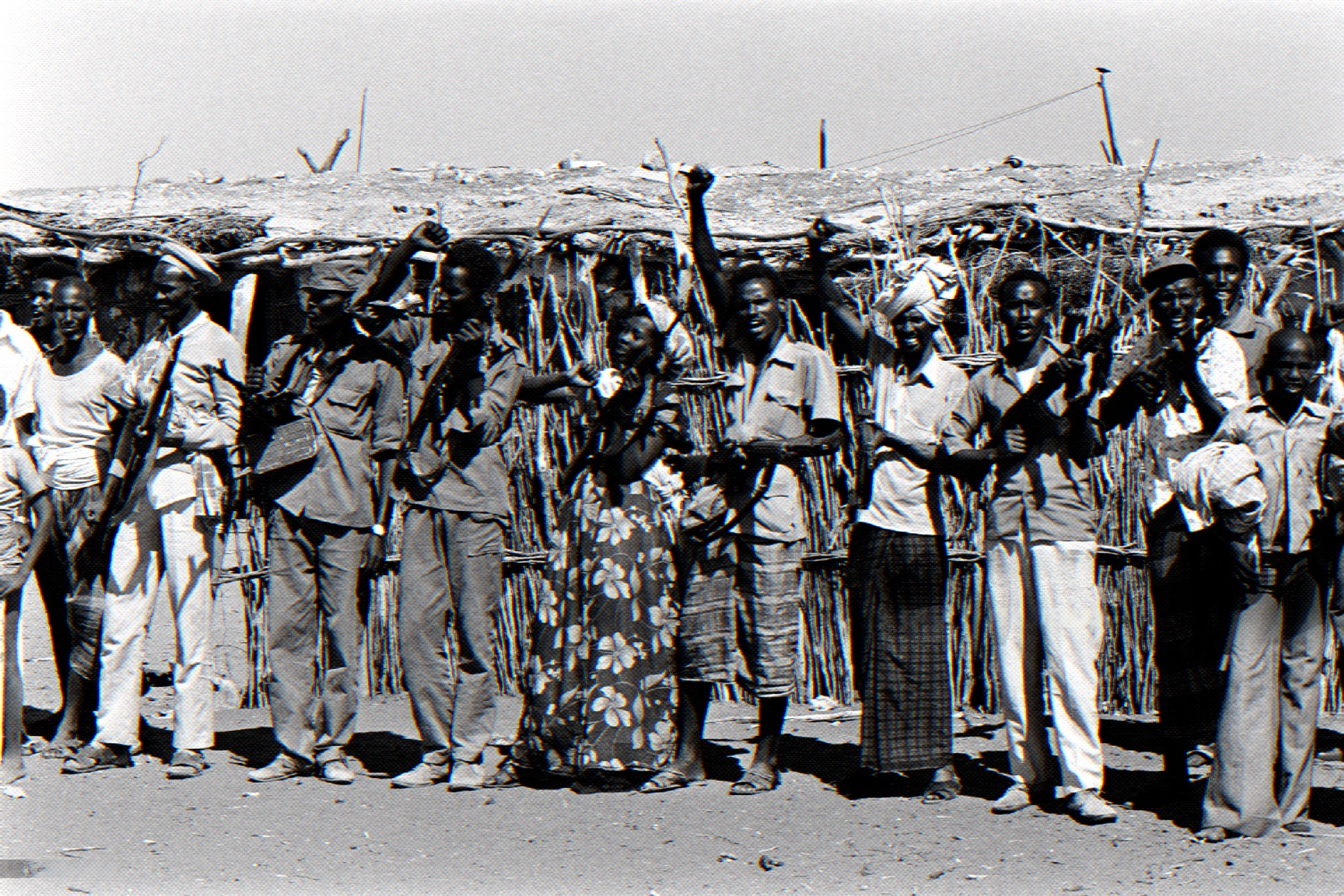
    WSLF fighters rallying in the liberated town of Qalaafe, 1977.

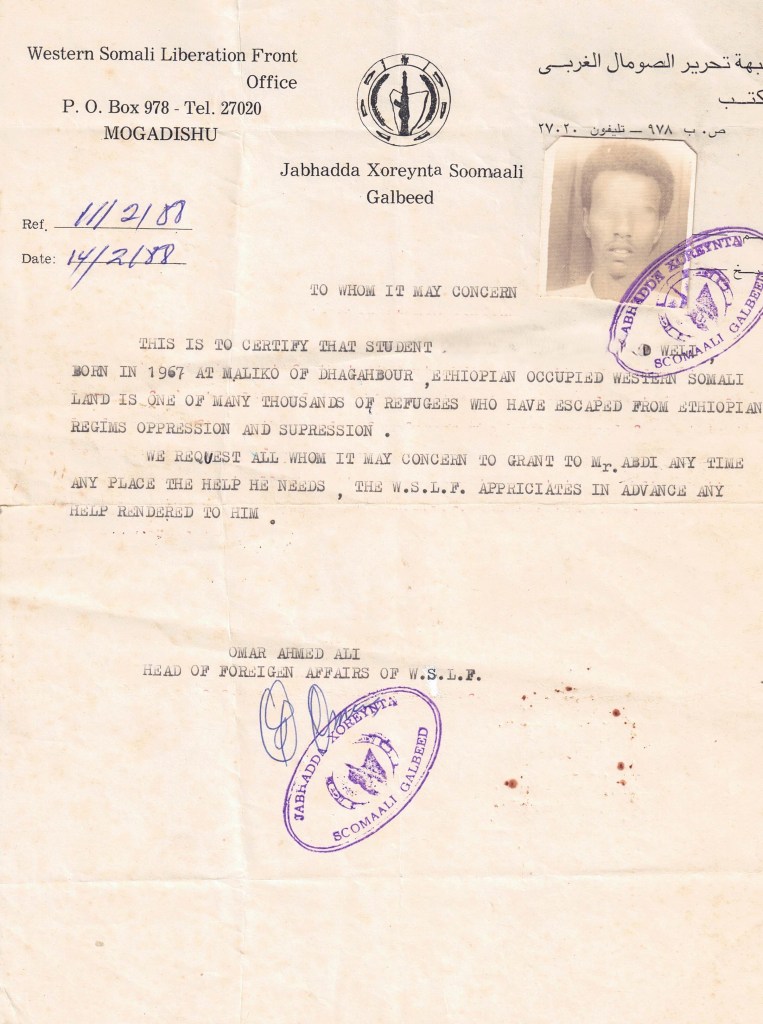
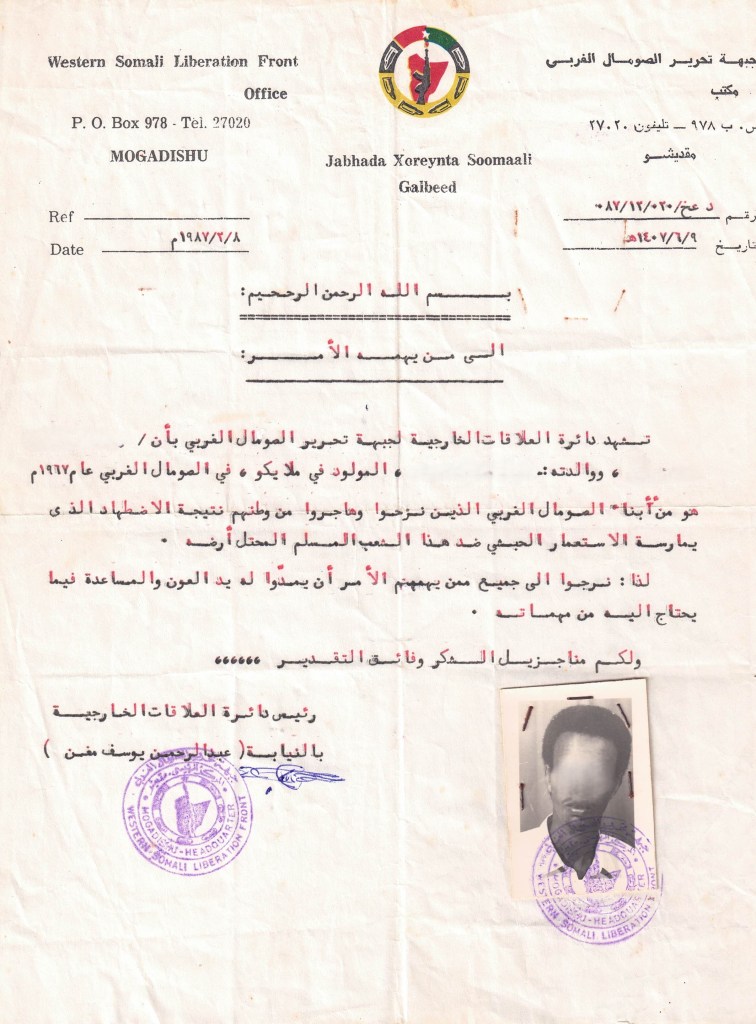
    Among them were letters of support issued by the WSLF, recognising the plight of refugees from the Ogaden region and urging readers to support my father as he prepared to study at Al-Azhar University in Cairo. The letters weren’t just rhetorical gestures; they were practical instruments. Because Al-Azhar would not recognise his Ethiopian high school diploma, Ethiopia being a non-Arab state. My father, despite his extensive informal studies in Arabic and Islamic jurisprudence, could not obtain a visa through conventional channels.

    The WSLF intervened, reclassifying his academic credentials under Somali authority. This meant he could be accepted into the university without repeating years of schooling. It was an act of solidarity that spared him from being trapped in a bureaucratic loop that would’ve spanned years.

    A support letter from the Western Somali Liberation Front, 1988.

    When I found those documents, I knew immediately who I wanted to share them with. Not just fellow young Somalis online, but a particular individual. Abdimalik Ali Warsame, a researcher and archivist focused on military history, foreign intervention, and Islamic political movements in the Horn of Africa, and the founder of somalihistoryarchive.com. He’s active on X at @walaalwhoops and is the author of a piercing analysis on Geeska, detailing the longstanding relationship between Ethiopia and the Zionist entity in their efforts to undermine Somali nationalism and obstruct the emergence of a unified, Muslim regional power.

    Coming across those WSLF documents was exciting, but storing them on my computer wasn’t enough. They deserved better. They deserved to be shared, studied, remembered. It’s no coincidence that I knew exactly who I wanted to entrust them to, Abdimalik’s work had long resonated with me. I’ve followed his X posts for some time, especially those related to the WSLF and the Ogaden region, a region I call home.

    Archivists like Abdimalik are not merely content creators or hobbyist historians. They are custodians of memory. What they’re doing is far more than sharing old clippings — they are constructing a parallel archive. A people’s archive. One that exists outside the reach of governments, beyond the silence of broken institutions and the locked rooms of colonial museums.

    Rich nations like the United States, Canada, and the United Kingdom invest hundreds of millions, sometimes billions, of dollars in preserving everything they deem historically relevant. From Indigenous artefacts to 1970s kitchen appliances, bus tickets, land deeds, family photos, and even cereal boxes .They digitise it all. They build the infrastructure to ensure their cultural memory lives on. These are nations with the capacity to store their history in cold vaults and digital clouds, curated by archivists and funded by state grants.

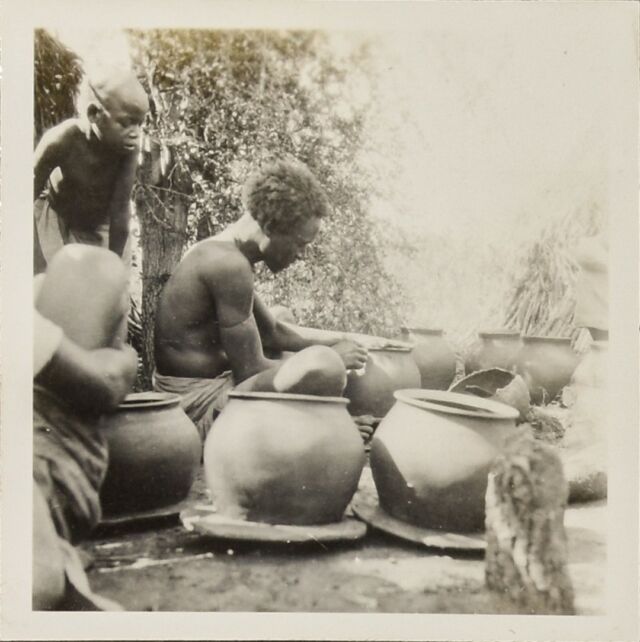
    A Somali man making a clay pot in Gelib, 1933, held at the Powell-Cotton Musuem. An example of one of many records held abroad in the museums of former colonial powers.

    Somalia, like many nations that have faced war, collapse, and displacement, does not enjoy such luxuries. We do not have a billion-dollar national archive. Decades of war, neglect, and institutional erosion have left vast swathes of our history vulnerable to “falling into oblivion”.

    But in that vacuum, decentralised efforts are doing what formal institutions cannot. Somali archivists, historians, translators, and poets are doing the slow, careful work of rebuilding our historical record — connecting timelines, contextualising events, uploading testimonies, linking newspaper clippings to oral histories. They are building a Somali narrative, for Somalis, on our own terms.

    It is easy to find, it outlives politics, and most importantly, it is ours.


    “In the name of God, the Most Gracious, the Most Merciful:

    To whom it may concern Mogadishu The Foreign Relations Department of the Western Somali Liberation Front certifies that [] and his mother: [], born in Malayko, Western Somalia in 1967 AD, is one of the sons of Western Somalia who were displaced and emigrated from their homeland as a result of the persecution practiced by the Abyssinian colonialism against this Muslim people whose land was occupied

    Therefore: We ask all concerned to extend a helping hand to him in his required tasks. We thank you very much and express our deepest appreciation to you

    Head of the Department of Foreign Relations Acting”

    A similar support letter, written in Arabic, 1987.


    To all Somali archivists, researchers, collectors, poets, translators, and memory-keepers — I offer my deepest respect. Your work is nothing short of essential. You are preserving our dignity, our identity, and our truth.

    But I also offer a word of caution: social media is fragile ground. Posts can be shadowbanned, accounts deleted, threads misreported or buried. Algorithms change. Censorship arrives subtly, then suddenly. We have already seen how rapidly platforms like X can shift in tone and policy.

    That is why I urge Somali archivists — and all who care about historical memory — to safeguard their work. Do not leave it all in the hands of tech corporations. Mirror your posts. Host your threads, essays, and archives on your own websites. Back up your material to hard drives and independent servers. Share files with trusted peers. Use the platforms, but do not be owned by them.

    Great efforts were made by those before us to uphold our culture and history in the face of upheaval, fragmentation, and displacement. It is now our responsibility to preserve, strengthen, and carry it forward, particularly in the digital realm.

    We must ensure our future generations inherit a record of who we were — not what others said we were.


    A list of my personal favorite archives/archivists:

    ¶¶¶¶¶

    ¶¶¶¶¶

    ¶¶¶¶¶

    ¶¶¶¶¶

    ¶¶¶¶¶

  • (06/06/2025 – please excuse old referenced articles, I began writing this the day of the attack and life got in the way)

    In 2010, we first saw a glimpse of what cyberwarfare could look like. The US (in collaboration with Israel) engineered Stuxnet, a malicious computer worm that caused damage to SCADA systems. Stuxnet was then deployed in Iran’s Natanz nuclear facility, sabotaging and disrupting the nation’s nuclear programme. At the time, it was both groundbreaking and worrying. Fast forward 14 years, and it’s clear how rapidly and meticulously world powers have sharpened their tools—maximising reach and obscuring responsibility.

    On the 17th of September 2024, thousands of pagers and walkie-talkies across Lebanon simultaneously exploded. It was clear that Hezbollah was the target, but civilian casualties—and the detonation of devices used by medical staff beg the questions: how did they get there, and what does this mean for everyone else?

    (backup for video from above tweet)

    In cybersecurity, a supply chain attack is a nightmare. Firewalls, endpoint detection, and 24/7 SOC teams mean nothing when the devices we’re trying to secure come out of the box already compromised—with no way of knowing until it’s too late. The Israeli made AR-924 pagers were reportedly tampered with during manufacturing or distribution, allowing embedded explosives to be remotely detonated once in the field (The Guardian, 2024)

    This wasn’t just a technical triumph by Israel, it was a demonstration. The message was loud and clear: no tool is safe, no space is neutral. The battlefield doesn’t begin where you use technology, it already began long ago, where the technology was assembled. Weaponised logistics. If pagers can explode, what about insulin pumps? The phone in your pocket? The headphones you’re wearing right now?

    Assuming some of these pagers were used by Hezbollah, how many others were caught in the blast radius? If these are the same models used in hospitals, neonatal wards, and field clinics—as several regional reports suggest—what are the chances they also reached civilian hands? Not zero. In fact, dangerously likely (Human Rights Watch,2024).

    Under the Geneva Conventions (which mean nothing to Israel and it’s military forces), attacks must distinguish between combatants and civilians. Medical infrastructure is explicitly protected. Article 18 of the Fourth Geneva Convention mandates that civilian hospitals “may in no circumstances be the object of attack” (ICRC, Rule 28)

    Supply chain attacks offer no such distinction. There is no firewall between Hezbollah’s preferred comms devices and the doctor working in an ICU. Legality aside, Israel has flaunted international law since it’s inception and comes as no surprise.A far darker question opens up: what happens when all civilian tools become dual-use?

    THE FUTURE OF WAR IS ALREADY HERE

    (graphic)

    The future of war is a list of MAC addresses. The Russia–Ukraine conflict has already shown us what this looks like—swarms of cheap drones, automated or remote targeting, Starlink jamming, and cyber incursions into civilian infrastructure. In this new theatre, everything from a supermarket’s Wi-Fi router to a child’s toy drone becomes a node in the war machine.

    Which brings me to DJI.

    Frank Wang, founder and CEO of DJI, built the company with a vision to democratise drone technology. What he might not have imagined is that today, his drones are routinely repurposed by both Russian and Ukrainian forces to drop grenades on trenches, stream attacks live in 4K, and track the dying in real-time. Simple 3D-printed attachments and DIY mods now allow cheap commercial drones to drop grenades, deliver explosives, or spy on enemy positions in real-time. As Wired reported, entire marketplaces have sprung up around these modifications, turning consumer gadgets into battlefield tools (Wired, 2024).

    I can’t help but wonder: has Wang ever watched one of those videos? Those silent clips from drone-mounted cameras showing a soldier crawling for cover, unaware he’s being watched from above, unaware a grenade is seconds from landing?Or worse, the ones where the soldier is fully aware. Pleading for mercy, unable to move due to his injuries.

    I write this not to marvel at Israel’s blatant disregard for civilian lives, but to mourn what it means. Future wars may not demand boots on the ground. They might only need access to a manufacturer’s firmware library, a handful of microchips, and the remote code to make them burn.

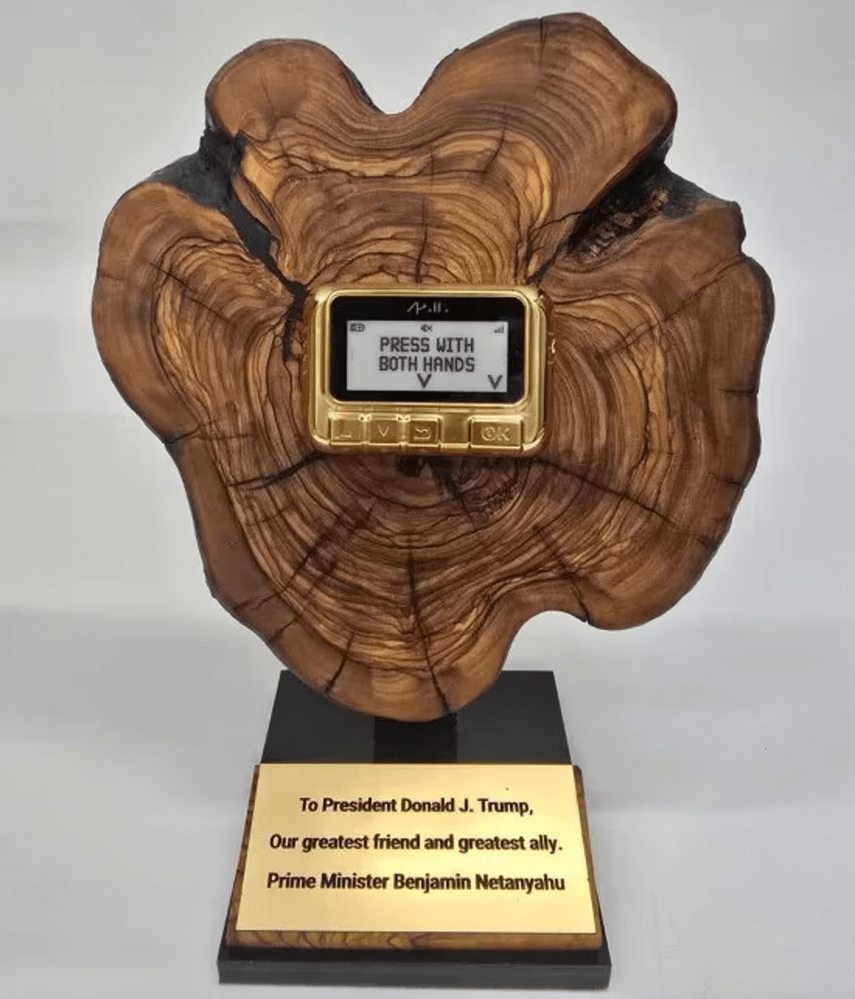
    We won’t know until it’s far too late, a sudden heat in our pockets as our phone detonates or the steering wheels of our vehicles locking up as control is seized from us. Regardless, it will be too late. They’re making trophies and laughing in our faces as they rob us of our agency.

    https://www.theguardian.com/us-news/2025/feb/06/netanyahu-trump-golden-pager-lebanon-hezbollah-attack

    https://www.foxnews.com/politics/netanyahu-gifts-fetterman-silver-plated-beeper-after-he-praised-israels-lebanon-pager-operation

    Free Palestine

    لعنة الله على دولة إسرائيل المجرمة

    References:


    ¶¶¶¶¶

    ¶¶¶¶¶

    ¶¶¶¶¶

    ¶¶¶¶¶

    ¶¶¶¶¶

  • ·

    , ,

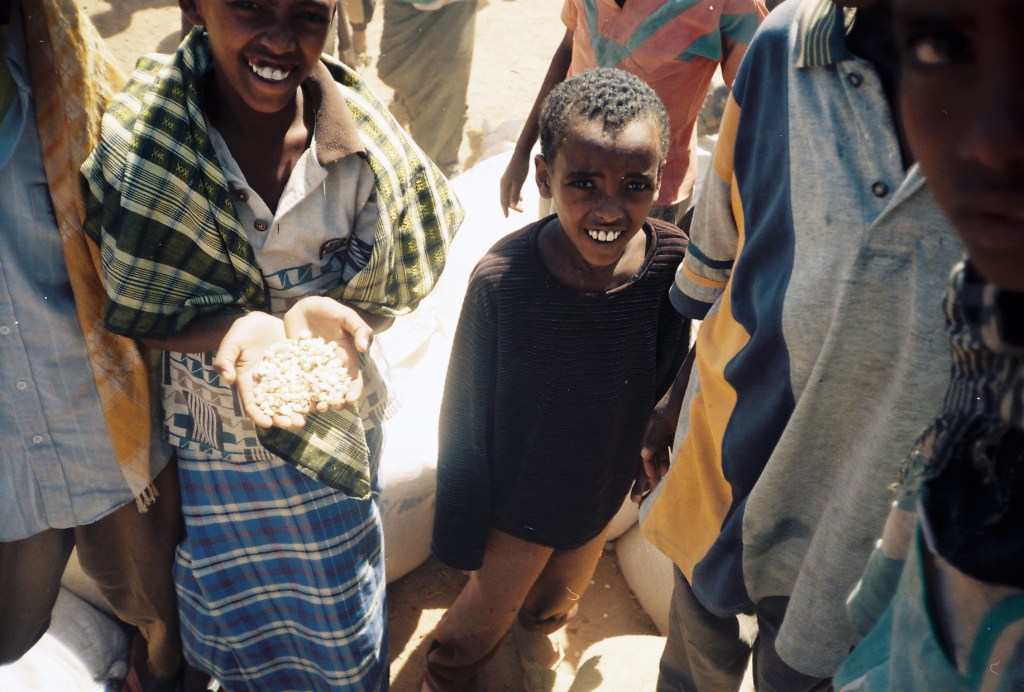
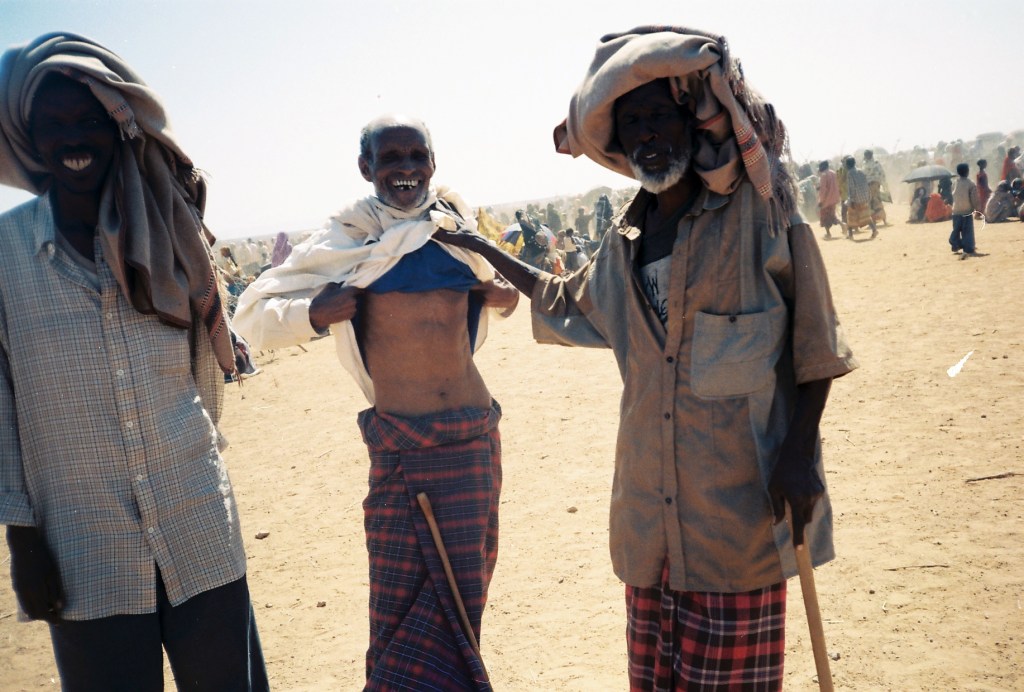
    Photos from Jannogaaban circa 2006. Jannogaaban translates to short/small heaven.

    “يا أهل الإسلام، الصمود يعني القرار، وجبن القلب يعني الفشل، وتأكدوا أن الصابرين هم الذين سينتصرون، وضعف القلب والجبن هما سببان للخيبة، وسيرى الله من يصبر هو المنتصر. على عدوه، فإن الله معه، ومن يثبت على حد السيف فهو منتصر للمستقبل، ولن يتعب بعد ذلك. وإذا سار مع الله يكون مسكنه أكثر “مُكرَّمٌ ومُعترف بجهوده، إن الله يحب الصابرين”

    الإمام الغازي لقواته قبل معركة شمبرا كوري

    ¶¶¶¶¶

    ¶¶¶¶¶

    ¶¶¶¶¶

    ¶¶¶¶¶

    ¶¶¶¶¶